
Commitment, but with flexibility to adapt
4 strategies that keep me training consistently when life gets in the way
The path to consistency isn't paved with rigid schedules but with the ability to adapt.

Embarking on my fitness journey, I quickly learned that the path to consistency isn't paved with rigid schedules but with the ability to adapt. Life throws curveballs — unexpected meetings, bad weather, a rough night of sleep — and the key to staying on track is having strategies that bend without breaking. Here are four principles that have kept me moving forward, even when plans go sideways.
1) Planning with Adaptability

One of the biggest insights I've gained is that a training plan should be a guide, not a prison. I plan my workouts for the week every Sunday, but I always leave room for life to happen. If a morning run gets derailed by an early meeting, I shift it to the afternoon or swap it with a rest day. The goal isn't to follow the plan perfectly — it's to get the work done, even if the order changes.
This mindset has had a huge impact on my training consistency. Instead of feeling defeated when things don't go as planned, I feel empowered because I always have a backup. Having a Plan B (and sometimes a Plan C) means I never have an excuse to skip a workout entirely.
2) Preparing My Gear Ahead of Time
Every night before a training day, I lay out everything I need — shoes, clothes, watch, nutrition, water bottles, the works. This small nightly routine removes friction from my mornings and eliminates the temptation to hit snooze and skip the session.
There's something powerful about seeing your gear ready and waiting for you. It's a visual commitment, a silent promise to your future self. When the alarm goes off at 4:30 AM and my kit is already laid out, the decision is practically made for me. The motivation of readiness is real — it turns "should I train?" into "let's go."
3) Getting Ahead on Work
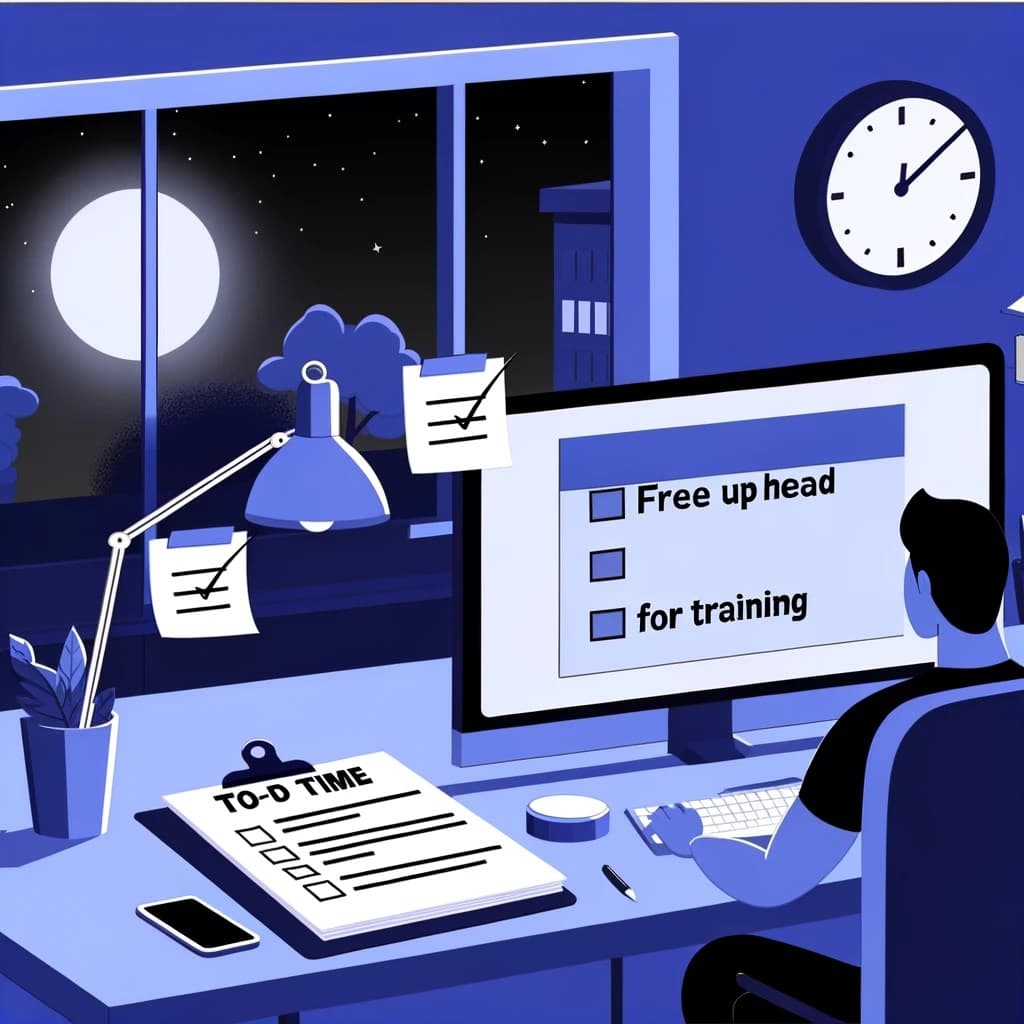
One of the advantages of working remotely is the flexibility to structure my day around training. I've learned to leverage this by getting ahead on my work tasks whenever possible. If I know I have a long ride or a brick workout scheduled, I'll put in extra hours the day before so I can train without guilt or stress.
This approach requires discipline, but it pays off massively. By front-loading my work, I create guilt-free windows for training. It's not about working less — it's about working smarter so that fitness and career can coexist. When both areas of my life feel balanced, I perform better in each.
4) Starting Early for Safety and Efficiency

Embracing the dawn has been a game changer. I start my training sessions as early as possible, often before sunrise. Training in the early morning means cooler temperatures, less traffic, and fewer distractions. It's just me, the road, and whatever playlist or podcast is keeping me company.
Training fasted in the early hours has also become a part of my routine. While it's not for everyone, I've found that my body has adapted well and I feel lighter and more focused during those sessions. Safety is another big factor — fewer cars on the road at 5 AM means I can ride and run with more peace of mind, especially on routes without dedicated bike lanes.
Wrapping It Up
This fitness journey has been a wild ride, and I wouldn't trade it for anything. The biggest lesson? Commitment doesn't mean being inflexible. It means showing up consistently by finding ways to adapt when life doesn't go according to plan. Whether it's rearranging my schedule, prepping my gear the night before, getting ahead on work, or waking up before the sun — every small strategy adds up to big results over time. Stay committed, stay flexible, and keep moving forward.
Andres.
The biggest lesson? Commitment doesn't mean being inflexible — it means showing up consistently by finding ways to adapt. Stay committed, stay flexible, and keep moving forward.